

I’m Hungry. What Are My Gluten-Free Restaurant Risks?
A practical restaurant triage guide for checking ingredients, equipment, staff knowledge, cross-contact, and whether the kitchen can explain how your meal will be prepared.
Eating gluten-free at home gives you control over the ingredients, equipment, and preparation.
Eating in a restaurant requires you to judge a process you cannot completely see.
Every order depends on ingredients, marinades, sauces, preparation surfaces, cooking equipment, staff knowledge, and what happens when the kitchen becomes busy.
This guide is for one immediate situation: you are hungry, you need to choose a restaurant, and you want to understand the risks before ordering.
The Quick Decision
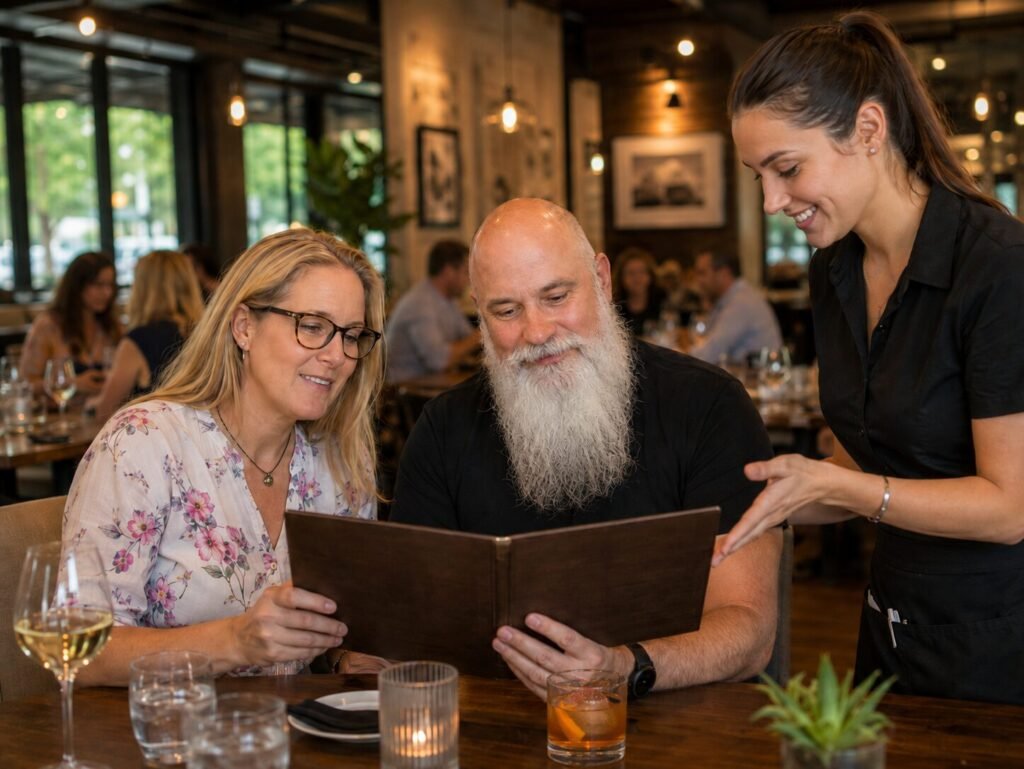
Choose the restaurant when staff can explain:
- What ingredients are used
- Whether sauces, marinades, and proteins are prepared in advance
- What equipment is shared
- How the order will be prepared and marked
- What the kitchen cannot reliably control
Choose something else when the answers are vague, contradictory, dismissive, or based entirely on a gluten-free menu symbol.
Honest limitations are more useful than confident guesses.
A Gluten-Free Menu Is a Starting Point
A gluten-free menu can help identify possible dishes. It does not explain everything that happens before the food reaches your table.
An item may encounter gluten through:
- Shared fryers or cooking oil
- Shared pasta water, strainers, or colanders
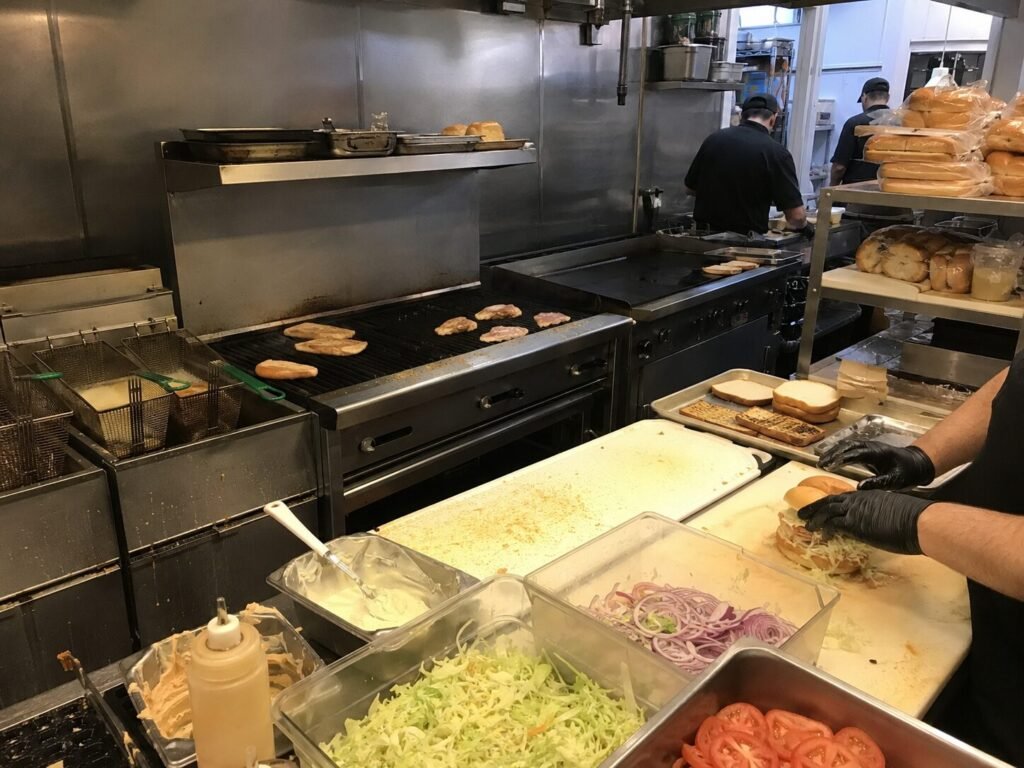
- Grills, griddles, pans, woks, and ovens
- Cutting boards and preparation surfaces
- Utensils, gloves, sauce ladles, and serving equipment
- Sauces, marinades, broths, and seasoning blends
- Flour-heavy preparation areas
- Bread baskets, crumbs, and shared table items
- Rushed handling during busy service
The useful question is not only, “Is this item gluten-free?”
Ask, “How is this item prepared and kept separate from gluten-containing food?”
Read Restaurant Cross-Contact: Why Gluten-Free Menus Are Not Enough for the complete kitchen-risk explanation.
Do not ask only:
“Is this gluten-free?”
Ask:
“What ingredients, equipment, and preparation steps are involved?”
The Five-Minute Restaurant Check
You do not need to investigate every piece of equipment before sitting down. Start with five practical checks.
1. Check the Menu Before Arriving
Look for more than a gluten-free symbol. Helpful menus may explain shared fryers, preparation limitations, substitutions, allergy procedures, or whether the restaurant can accommodate strict gluten avoidance.
A menu with no gluten-free markings is not automatically impossible. A menu covered in gluten-free symbols is not automatically well controlled. Both require a conversation.
2. Call During a Quiet Period
Call between meal periods when a manager or kitchen lead may have time to answer. Asking during the dinner rush makes a detailed conversation harder for everyone.
3. Ask About the Process
Ask how the dish is prepared, what else touches the equipment, whether sauces and proteins are prepared in advance, and who can verify the ingredients.
4. Listen to the Quality of the Answer
A clear answer describes ingredients and handling. A weak answer repeats the menu label without explaining the kitchen.
5. Keep a Backup Plan
Have another restaurant, a simpler order, or travel food available. Hunger makes it easier to accept answers you would question at any other time.

Questions That Actually Help
You usually do not need to ask every question. Choose the ones that match the dish and restaurant you are considering.
- Does this dish contain wheat, barley, rye, malt, regular soy sauce, flour, breadcrumbs, or another gluten source?
- Is the protein marinated, seasoned, breaded, or prepared before it is ordered?
- Is the sauce, broth, or seasoning made in-house, and can its ingredients be checked?
- Does any part of the meal use a shared fryer?
- Can the food be prepared on a cleaned surface with clean utensils?
- Does bread, flour, regular pasta, or dough use the same area or equipment?
- Can the order be marked for gluten-free precautions?
- Can a manager, chef, or kitchen lead confirm the process?
Be clear about what you need. “Gluten-free” may mean preference, ingredient substitution, or strict avoidance depending on the customer and restaurant.
When cross-contact matters, say so directly.
Answers That Build Confidence
- “The fries use a dedicated fryer that does not handle breaded food.”
- “We cook the gluten-free pasta in fresh water and use a separate strainer.”
- “That sauce contains regular soy sauce, so the dish will not work.”
- “We can prepare the protein in a clean pan with clean utensils.”
- “The gluten-free pizza stays on a dedicated tray and uses a clean cutter.”
- “Our kitchen is too flour-heavy to promise that level of separation.”
The last answer may mean eating somewhere else, but it is still useful. The restaurant explained its limit instead of guessing.
Answers That Should Slow You Down
- “It should be fine.”
- “We can take the bun off.”
- “The fryer is hot enough to kill gluten.”
- “The menu says it is gluten-free.”
- “Nobody has complained before.”
- “A little flour should not matter.”
- “I think the sauce is okay.”
These answers do not explain the ingredients or preparation process. Ask for someone who can verify the details, choose a simpler order, or select another restaurant.
Confidence is not the same as a controlled process.
A Limitation Can Be a Good Answer
A restaurant does not need to promise it can handle every gluten-free request.
A clear explanation that the fryer is shared, the sauce cannot be changed, or the kitchen cannot control loose flour gives you information you can use.
The problem is not hearing no. The problem is receiving a yes with no process behind it.
Common Restaurant Risks by Cuisine
These are patterns to investigate, not ratings or guarantees.
American Bar Food and Burgers
Common concerns: Shared fryers, breaded appetizers, bun crumbs, shared grills, sauces, and glove changes.
Ask: What uses the fryer? Are buns toasted on the same grill? Can the meal be prepared on a clean surface?
Italian Restaurants
Common concerns: Shared pasta water, strainers, flour-heavy prep, bread service, pizza ovens, cutters, sauces, meatballs, and fryers.
Ask: Is pasta cooked in fresh water? Is pizza prepared separately and baked on a protective tray?
Chinese Restaurants
Common concerns: Regular soy sauce, cooking wine, premixed sauces, marinated proteins, broths, shared woks, utensils, and fryers.
Ask: Was the protein marinated? Can the dish avoid premixed sauce? Can clean equipment be used?
Mexican Restaurants
Common concerns: Corn and flour tortillas sharing surfaces, tortilla presses, grills, fryers, chips, seasonings, sauces, mole, and breaded proteins.
Ask: Are corn tortillas heated separately? Do chips use a shared fryer? Have sauces and marinades been checked?
nnJapanese and Thai Restaurants
Common concerns: Regular soy sauce, oyster sauce, tempura, imitation crab, marinades, curry pastes, shared woks, grills, and fryers.
Ask: Can sauce ingredients be checked? Was the protein marinated? Does tempura or breaded food share the fryer?
nnnnIndian, Mediterranean, and Greek Restaurants
Common concerns: Breads, shared ovens and grills, marinades, thickeners, spice blends, fried foods, dips, and buffet service.
Ask: Does the sauce contain flour? Is bread prepared nearby? Is the fryer shared? Can food come directly from the kitchen?
nnnnBreakfast Restaurants and Diners
Common concerns: Pancake batter, toast, shared griddles, waffle irons, toasters, fryers, butter, and condiment containers.
Ask: Can eggs and meat use a clean pan? Is gluten-free bread placed in a shared toaster? How are potatoes prepared?
Fast Food and Chains
Common concerns: Shared fryers, crowded lines, bun crumbs, shared gloves, sauces, and inconsistent execution between locations or shifts.
Ask: Is there a dedicated fryer? Can gloves be changed and a clean surface used? Are procedures documented?
More Restaurant and Cuisine Guides
Use the guide that matches the restaurant in front of you, then verify the ingredients, equipment, and preparation process at that location.
Explore the growing Gluten-Free Cuisine Risk Guide library for deeper guidance.
Cuisine Is Only One Part of the Decision
A cuisine that appears naturally gluten-free may still depend on shared equipment or gluten-containing sauces. A flour-heavy restaurant may have unusually strong procedures.
Instead of asking which cuisine is safest, compare the individual restaurants:
- Which restaurant understands the request?
- Which restaurant can identify the ingredients?
- Which restaurant can explain its equipment and workflow?
- Which restaurant is honest about its limitations?
- Which restaurant can handle the order during the time you plan to visit?
The cuisine tells you where to investigate. The individual kitchen determines what happens next.
Reviews Help, but Details Matter More Than Stars
Recent restaurant reviews can reveal whether staff understand gluten-free preparation, but a star rating alone does not explain what happened in the kitchen.
Look for reviews that describe:
- Whether the diner spoke with a manager or chef
- What questions the restaurant answered
- Whether a dedicated fryer or separate equipment was available
- Whether staff identified limitations
- How recently the visit occurred
Menus, staff, suppliers, and procedures change. Use reviews to prepare your questions, not replace them.
See how we approach Gluten-Free Restaurant Reviews.
Carryout and Delivery Add More Uncertainty
Dining in person allows you to ask questions, clarify the order, and catch an obvious mistake before eating.
Carryout and delivery add more handoffs:
- The request must be entered correctly
- The kitchen must see and understand it
- The correct preparation must be followed
- The meal must be packed in the correct container
- Bread or gluten-containing food must not be added
- The correct order must reach you
When ordering carryout, contact the restaurant directly when practical, keep the order simple, confirm the request, and inspect the meal before eating.
A note in a delivery application cannot fix an unclear kitchen process.
The Walk-Away Test
Choose another restaurant or another meal when:
- Staff do not understand the request
- Answers are vague, dismissive, or contradictory
- The restaurant relies entirely on menu symbols
- Nobody can confirm the ingredients
- The cooking process cannot be explained
- The kitchen is too busy to handle the request carefully
- The answer does not fit your own medical needs or risk tolerance
Walking away is not a failure. It is one of the available restaurant decisions.
What This Guide Can and Cannot Tell You
This guide helps you recognize common restaurant risks and ask better questions. It cannot certify a restaurant, guarantee a meal, or determine what level of risk is medically acceptable for you.
Restaurants change staff, recipes, suppliers, menus, and procedures. Confirm the current process during each visit and make decisions based on your own dietary and medical needs.
Review our Medical & Food Disclaimer for additional context.
Start With Clear Answers
Restaurant dining is not about finding a magic cuisine or trusting a symbol. It is about understanding the ingredients and preparation well enough to make an informed choice.
Eat where the answers are clear. Simplify the order when that helps. Choose another restaurant when the process does not make sense.
Protect the trip, not just the meal.
Continue Your Restaurant Research
- Restaurant Cross-Contact: Why Gluten-Free Menus Are Not Enough
- Shared Fryers and Gluten-Free Food: What Actually Matters
- Chinese Food and Gluten: What Gluten-Free Travelers Should Know
- How to Eat Gluten-Free at an Italian Restaurant
- Gluten-Free Cuisine Risk Guides
- Gluten-Free Restaurant Reviews
Last reviewed: July 27, 2026