

Chinese Food and Gluten: What Gluten-Free Travelers Should Know
Rice and vegetables may be naturally gluten-free, but sauces, marinades, cooking wine, shared woks, fryers, utensils, and advance preparation make Chinese restaurant meals difficult to judge from the menu alone.
If Chinese food were only about its basic ingredients, many gluten-free travelers would have little reason to hesitate.
Rice is naturally gluten-free. Vegetables can be straightforward. Plain meat, seafood, or tofu may sound simple.
The difficulty is what happens before and during cooking. Sauces may be mixed in advance. Proteins may already be marinated. Woks, utensils, oil, fryers, and preparation surfaces may be shared throughout service.
The menu tells you what the dish is called. The kitchen process tells you whether it may work for you.
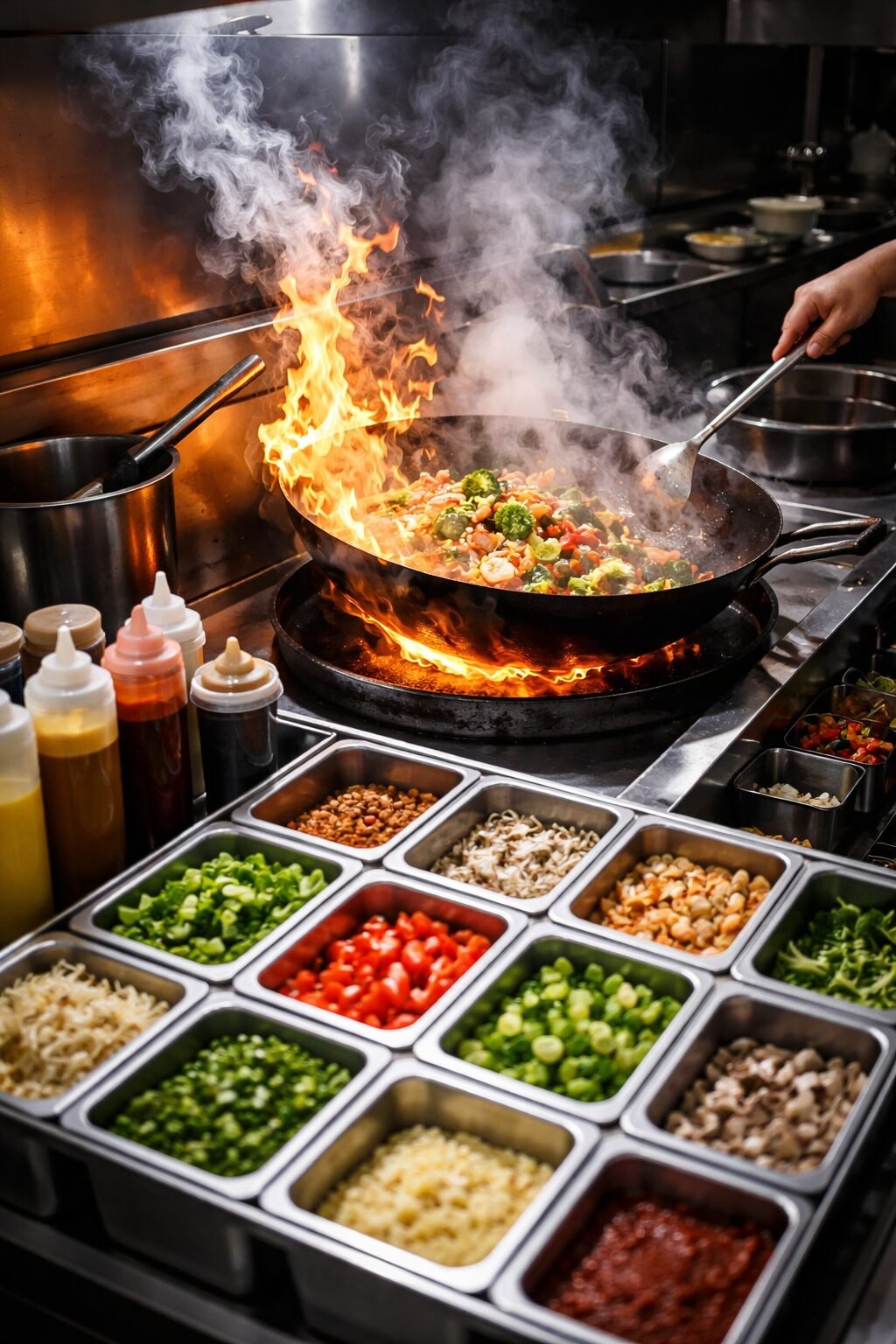
Why Chinese Restaurant Food Is Hard to Judge From the Menu
Chinese food can be one of the more complicated cuisines for travelers who need to avoid gluten. The main concerns are not limited to one ingredient. They include sauces, marinades, cooking wine, broths, advance preparation, shared fryers, woks, utensils, oil, and fast-moving kitchen workflows.
This guide explains common restaurant patterns and the questions that help reveal them. It does not certify any restaurant, kitchen, or meal.
How Chinese Restaurant Kitchens Commonly Work
Many Chinese restaurants depend on advance preparation and shared ingredients to keep service fast and consistent.
Sauces may be mixed in bulk before service. Soy sauce, dark soy sauce, oyster sauce, hoisin sauce, fermented pastes, sugar, cornstarch, and Chinese cooking wine may be combined into mixtures used across several dishes. Some products contain wheat, while others vary by brand and recipe.
Proteins may be marinated or velveted hours before an order is placed. If regular soy sauce, wheat-containing cooking wine, or another gluten source is already in the marinade, asking for the finished sauce to be removed does not make the protein gluten-free.
Once service begins, cooking happens quickly. Woks and utensils may be shared continuously. Equipment may be wiped between dishes rather than fully washed. Oil, sauce, crumbs, and residue can move across the line.
These are ordinary features of an efficient kitchen. They are also why last-minute gluten-free substitutions may be harder than they appear.
Where Wheat Can Enter a Chinese Dish Before It Reaches the Wok
Gluten is not always visible on the finished plate. It may enter much earlier through ingredients or preparation.
Common sources to investigate include:
- Regular soy sauce and dark soy sauce
- Oyster sauce, hoisin sauce, and fermented bean pastes
- Chinese cooking wine and prepared cooking sauces
- Pre-marinated or velveted proteins
- Soup bases and broths prepared in advance
- Breaded, battered, or fried food
- Dumplings, wontons, egg rolls, and wheat-based noodles
- Shared oil, utensils, sauce containers, and preparation surfaces
The timing matters. Once a gluten-containing ingredient has been added during advance preparation, it cannot simply be removed when the order reaches the kitchen.
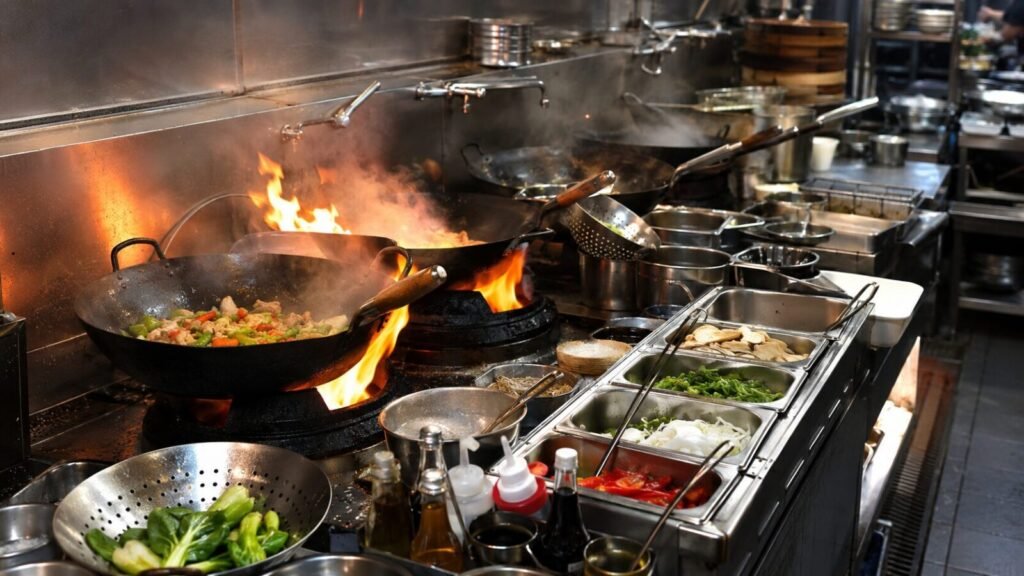
Soy Sauce Is Only the Beginning
Regular soy sauce commonly contains wheat, making it one of the first ingredients a gluten-free diner should ask about.
Tamari or specifically labeled gluten-free soy sauce may provide an alternative. Having a gluten-free bottle available, however, does not verify the rest of the dish.
You still need to know whether the protein was already marinated, whether a premixed sauce is being used, whether the broth contains gluten, and whether the meal can be prepared with clean equipment and utensils.
Changing the soy sauce at the end does not undo everything that happened earlier.
Cooking Wine, Sauces, and Prepared Ingredients
Chinese cooking wine, oyster sauce, hoisin sauce, fermented bean pastes, soup bases, and other prepared products can vary widely by brand and recipe.
A familiar name does not guarantee a familiar ingredient list. The restaurant may also buy commercial products that differ from what you use at home.
Ask whether staff can verify the actual product or ingredient list rather than relying only on the general name of the sauce.
Why High Heat Does Not Solve the Problem
Chinese cooking often uses very high heat, which can create confusion about whether gluten is somehow destroyed during cooking.
Heat changes texture and flavor. It does not make gluten safe for someone who needs to avoid it.
If gluten enters through a sauce, marinade, shared fryer, or food residue, cooking the meal hotter or faster does not remove the concern.
The Shared Wok Question
A shared wok is not automatically the same as a shared fryer, but it still requires a clear explanation of the restaurant’s cleaning and cooking process.
Ask whether the wok is thoroughly cleaned before a gluten-free dish or only wiped between orders. Also ask about the ladle, spatula, oil, sauce containers, and other equipment used during preparation.
In some restaurants, using a clean pan away from the regular wok line may be more workable. In others, the kitchen may not have the space, ingredients, equipment, or time to do that reliably.
A clear explanation of what cannot be controlled is more useful than a confident answer without a process behind it.
Shared Fryers Create a Separate Risk
Egg rolls, wontons, tempura, breaded chicken, battered seafood, and other wheat-containing foods may share fryer oil with items that begin without gluten.
A separate basket does not solve the problem when the oil itself is shared. Ask whether the restaurant has a dedicated gluten-free fryer and what else is cooked in it.
Read Shared Fryers and Gluten-Free Food: What Actually Matters for the complete fryer explanation.
Do not ask only:
“Can you make this gluten-free?”
Ask:
“How are the protein, sauce, wok, utensils, oil, and fryer handled?”
Why a Last-Minute Chinese Substitution May Be Too Late
Many restaurants genuinely want to help. The problem begins when gluten-free is treated as a last-minute ingredient substitution rather than a preparation process.
By the time you order:
- Sauces may already be mixed
- Proteins may already be marinated or velveted
- Broths and soup bases may already be prepared
- Woks and utensils may already be in continuous use
- Fryer oil may already contain residue from breaded food
- Staff may not be able to identify every ingredient during service
Removing one ingredient at the end does not remove what was added at the beginning.
This is not about blaming the restaurant. It is about understanding what the kitchen can realistically change for one order.
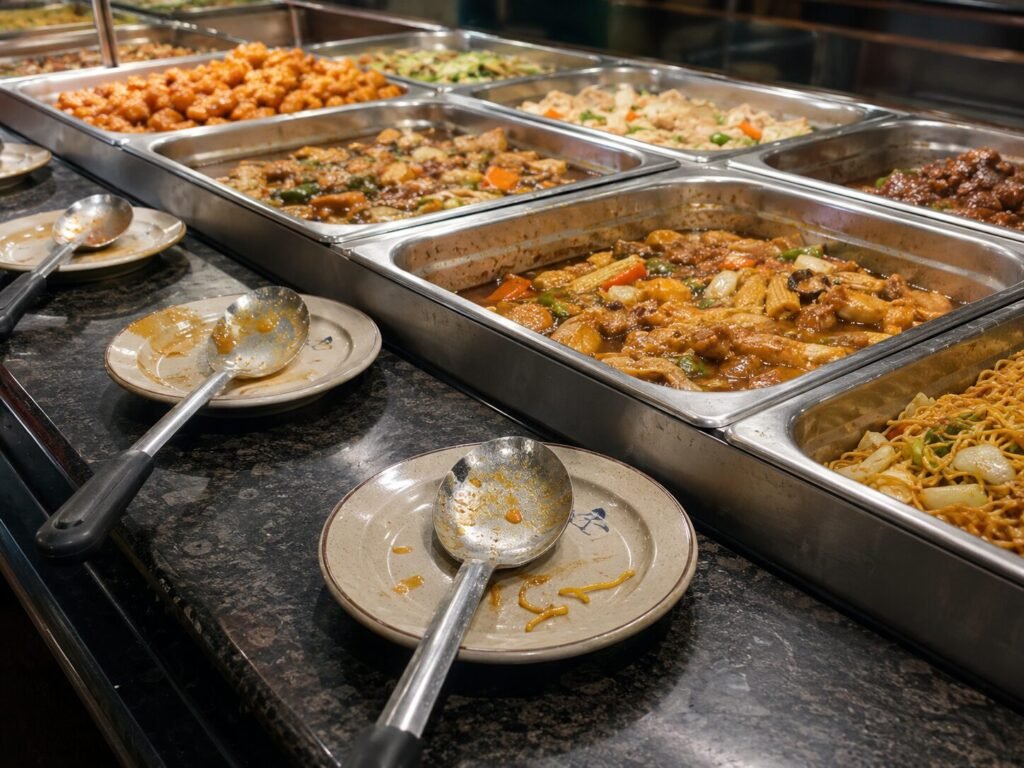
Why Buffets Change the Equation
Buffets add another layer of uncertainty. Serving utensils move between trays, sauces drip, crumbs spread, and food may be topped off instead of completely replaced.
Even when a dish begins gluten-free, the restaurant cannot fully control what other customers do with shared utensils after the food reaches the self-service area.
A manager may be able to provide a freshly prepared portion directly from the kitchen, but that requires a separate conversation. Do not assume a buffet label verifies either preparation or service conditions.
Questions That Follow the Chinese Preparation Chain
Questions about preparation are more useful than questions about menu labels.
- Are any proteins kept plain, unseasoned, and un-marinated?
- Does the protein contain regular soy sauce or cooking wine?
- Can the dish be made without a premixed sauce?
- Can you verify the ingredients in the sauce, broth, or marinade?
- Do you have gluten-free soy sauce or tamari?
- Can the meal be cooked in a thoroughly cleaned wok or a clean separate pan?
- Will clean utensils, fresh gloves, and separate oil be used?
- Does anything in the dish use a shared fryer?
- Is the broth or soup base prepared with gluten-containing ingredients?
You do not need every restaurant to say yes. You need answers specific enough to understand what the kitchen can and cannot control.
Chinese Kitchen Answers That Reveal What Is Actually Controlled
Useful answers describe an actual process:
- “We keep one protein un-marinated.”
- “We can use a clean pan and clean utensils.”
- “This sauce contains regular soy sauce, so we cannot use it.”
- “The fryer is shared with breaded food.”
- “We cannot control the wok line during busy service.”
Be cautious when the answer is only:
- “It should be fine.”
- “We can leave off the soy sauce.”
- “The heat burns it off.”
- “Nobody has complained.”
- “The chef will know.”
Confidence is not the same as a controlled process.
Ask About Sauces and Prep Before the Wok Line Gets Busy
The worst time to begin a detailed conversation is during peak service.
- Call between lunch and dinner
- Stop in during a quiet period
- Review the menu before arriving
- Avoid the busiest dinner periods when practical
Friday night at 6:45 is not when most kitchens can rethink their process. That is when they are executing it.
A server can begin the conversation, but a manager, chef, or kitchen lead may be better positioned to explain how sauces, proteins, broths, fryers, and equipment are handled.
Using Reviews and Apps Carefully
Crowd-sourced tools can help identify restaurants worth investigating, but they do not replace a current conversation with the restaurant.
- Find Me Gluten Free: Look for detailed reports about preparation, staff knowledge, fryers, woks, and sauces rather than relying only on star ratings.
- Google Reviews: Search for terms such as “celiac,” “gluten-free,” “shared fryer,” “soy sauce,” and “cross-contact.”
Recent, specific reports are more useful than general praise. Even a detailed review does not guarantee that the same staff, ingredients, or procedures will be present during your visit.
A Quieter Conversation Can Reveal More Than a Dinner-Rush Order
One of the most effective approaches is also the least rushed.
Stop in when you are not hungry and ask whether a manager or chef can help you understand the menu and preparation process.
Without the pressure of an immediate order, the restaurant may be able to:
- Identify plain proteins or vegetables that may be workable
- Flag sauces, broths, and marinades that should be avoided
- Explain how woks, pans, utensils, and fryers are handled
- Suggest a simpler preparation that is not obvious from the menu
- Tell you clearly when the kitchen cannot control the risk
This works because it respects how kitchens actually function.
A Workable Chinese Meal May Be Simpler Than the Menu Suggests
Success does not mean every Chinese restaurant becomes an option.
Sometimes success means:
- Ordering something plain and simple
- Finding a restaurant with documented gluten-free procedures
- Choosing only the parts of the meal that can be explained clearly
- Deciding the restaurant is not a workable fit
- Preparing gluten-free Chinese food at home instead
Walking away from uncertain answers does not mean the restaurant is bad or that you failed. It means you made the decision that worked for your body, your trip, and that particular kitchen.
Chinese food is worth missing sometimes. It is also worth finding a better way back to.
Both can be true.
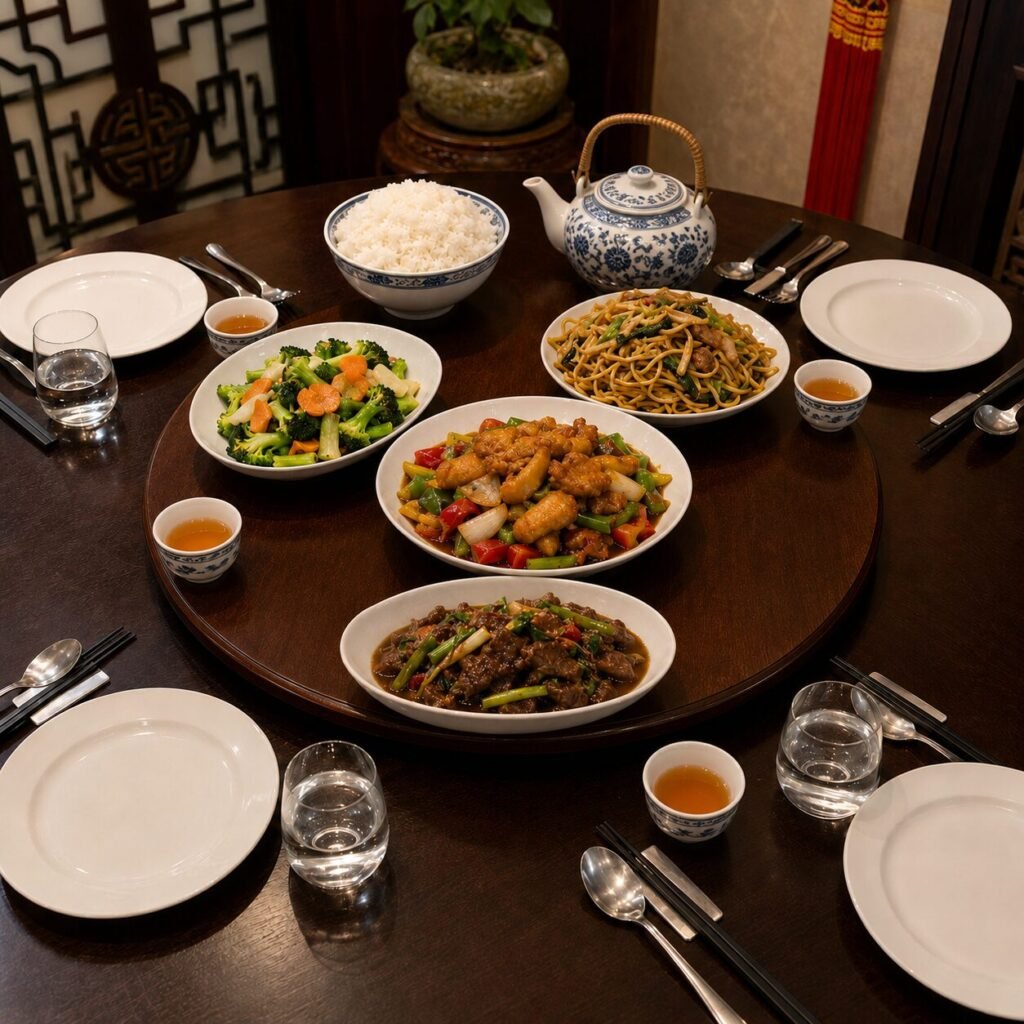
Chinese Food Requires the Whole Preparation Chain, Not One Ingredient Check
Chinese food can work for gluten-free travelers, but the kitchen must be able to explain its ingredients and preparation process.
Ask about sauces, marinades, cooking wine, broths, shared woks, utensils, oil, and fryers. Ask before the restaurant becomes busy, and be prepared to choose something else when the answers remain uncertain.
The question is not only whether the ingredients sound gluten-free. The question is whether the kitchen can prepare the complete meal in a way that works for you.
Continue Your Research
- Gluten-Free Cuisine Risk Guides
- Restaurant Cross-Contact: Why Gluten-Free Menus Are Not Enough
- Shared Fryers and Gluten-Free Food: What Actually Matters
- I’m Hungry: What Are My Gluten-Free Restaurant Risks?
Last reviewed: July 27, 2026
Trace a Chinese Dish From Protein to Finishing Sauce
Chinese restaurant questions work better when they follow the same path the dish follows through the kitchen.
Start with the base ingredient or protein, then trace:
protein or starch → marinade → sauce → stock or broth → seasoning → wok or cookware → fryer if used → finishing sauce
A dish can begin with rice, vegetables, tofu, seafood, or plain meat and still pick up wheat later in that chain.
The Marinade May Decide the Dish Before You Order
Proteins may be marinated or velveted before service. If conventional soy sauce, cooking wine, a seasoning mixture, or another wheat-containing ingredient is already in that preparation, leaving the final sauce off does not undo the earlier step.
Ask whether any protein is kept plain and un-marinated and whether staff can explain what goes into the marinade.
Sauce Names Are Less Useful Than the Ingredients Behind Them
Chinese restaurant sauces can combine soy sauce, dark soy sauce, bean paste, chili sauce, oyster sauce, cooking wine, starch, sugar, stock, and other prepared ingredients. Recipes and products vary.
Do not turn a sauce name into a permanent gluten verdict. Ask what product is used and whether staff can verify the ingredient list.
Broth and Stock Can Carry Ingredients You Never See on the Plate
Soup, noodle broth, stir-fry sauce, and braising liquid may begin with stock or packaged broth prepared earlier. That makes “what is in the broth?” a separate question from “what sauce is added?”
Ask whether the kitchen uses a house stock, packaged broth, bouillon, or seasoning base and whether its ingredients can be checked.
Seasoning Powder Can Bypass a Soy-Sauce Question
Asking “no soy sauce” does not tell you whether a seasoning powder, prepared base, bean paste, cooking wine, or another sauce is added instead.
Ask what sauces and seasonings go into the wok during cooking, including any powders or premixed bases.
The Wok Question Comes After the Ingredient Questions
A clean wok cannot fix a marinade or premixed sauce that already contains wheat. At the same time, verified ingredients do not answer whether residue remains on a shared wok, ladle, spatula, oil container, or prep surface.
Treat ingredient verification and equipment handling as two separate checkpoints.
Fried Chinese Food Adds an Oil Question to the Chain
Breaded chicken, wontons, egg rolls, battered seafood, tempura-style items, and other wheat-containing foods may share fryer oil with foods that begin without gluten.
Ask what else goes into the fryer and whether the oil itself is dedicated.
Questions That Follow the Chinese Preparation Chain
- Was the protein marinated or velveted before service?
- What is in that marinade?
- What sauces are added in the wok?
- What bean paste, chili sauce, oyster sauce, or cooking wine is used?
- Does the sauce or soup use stock, packaged broth, bouillon, or a seasoning base?
- Are seasoning powders or premixed sauces added?
- Can the actual product labels be checked?
- Can the dish be cooked in a thoroughly cleaned wok or clean separate pan?
- Will clean utensils and oil be used?
- Does anything in the order use a shared fryer?
- Is a finishing sauce added after cooking?
The useful Chinese restaurant question is rarely “Is this dish gluten-free?” It is “What happened at each step between the raw ingredient and the finished plate?”