

Restaurant Cross-Contact: Why Gluten-Free Menus Are Not Enough
A gluten-free menu can identify possible dishes. It cannot tell you how shared fryers, water, pans, surfaces, utensils, ovens, toppings, and rushed service affect the meal.
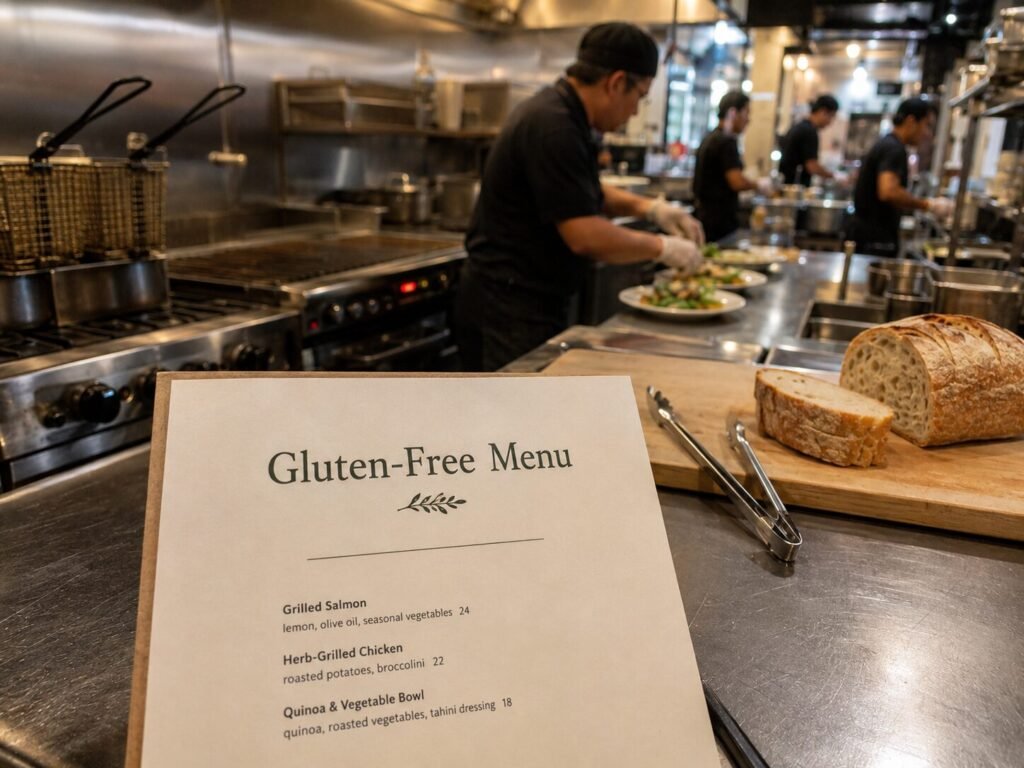
Restaurants can list gluten-free items and still prepare them in ways that introduce gluten.
That does not always mean the restaurant is being dishonest. It often means the menu describes the intended ingredients while the practical risk depends on preparation, cooking, plating, and service.
A meal can begin with gluten-free ingredients and then encounter shared water, oil, pans, preparation surfaces, utensils, ovens, toppings, containers, or hands.
That is why a gluten-free menu is useful but incomplete. The kitchen process determines what happens after the order is placed.
For a broader restaurant decision guide, start with I’m Hungry: What Are My Gluten-Free Restaurant Risks?
What Cross-Contact Means
Cross-contact occurs when food intended to be gluten-free comes into contact with gluten-containing food, residue, crumbs, flour, oil, water, utensils, surfaces, or equipment.
The ingredients may begin gluten-free. The problem develops during preparation or service.
- Gluten-free pasta cooked in water used for regular pasta
- Fries cooked in oil shared with breaded food
- Gluten-free pizza assembled on a flour-covered counter
- Salad prepared on a board holding crumbs
- Corn tortillas warmed beside flour tortillas
- Food handled with shared utensils or unchanged gloves
- A clean plate placed beside bread or crumbs on the kitchen pass
- A sauce ladle moved between regular and gluten-free pasta
Cross-contact is not always visible on the finished plate. That is why menu descriptions alone cannot explain the complete risk.
Gluten-Free Ingredients Are Only Step One
A restaurant may confirm that a pasta, bun, pizza crust, tortilla, sauce, or order of fries contains no gluten ingredients. That information helps, but it does not answer how the food will be handled.
- A gluten-free bun toasted in a regular toaster can pick up crumbs.
- A gluten-free crust assembled on a flour-covered counter can pick up flour.
- Corn chips fried with battered food share the same oil.
- Gluten-free pasta cooked in regular pasta water encounters wheat residue.
- A verified sauce can be compromised by a shared ladle or pan.
The ingredient list describes what the food is supposed to be. The kitchen process determines what reaches the table.
Do not ask only:
“Do you have gluten-free options?”
Ask:
“How do you prepare gluten-free orders to reduce cross-contact?”
The Main Cross-Contact Zones
Most restaurant cross-contact concerns come from a limited number of recurring systems.
Preparation Surfaces and Tools
Counters, cutting boards, sandwich lines, pizza stations, knives, tongs, spatulas, ladles, strainers, and serving utensils can transfer crumbs, flour, or residue.
A cleaned surface, clean tools, and fresh gloves provide a more controlled starting point.
Shared Fryers
Food that begins without gluten may share oil with chicken tenders, onion rings, tempura, calamari, battered fish, or other breaded food.
A separate basket does not create separate oil.
Read Shared Fryers and Gluten-Free Food: What Actually Matters.
Shared Water and Strainers
Gluten-free pasta or noodles may encounter wheat residue when cooked in water used for regular pasta, dumplings, or other gluten-containing food.
Ask whether fresh water, a separate strainer, and separate utensils are used.
Shared Pans, Grills, and Griddles
Grills and flat-tops may hold crumbs, bread residue, flour tortillas, pancakes, breaded food, or gluten-containing marinades.
A clean pan may be easier to control than a heavily used shared cooking surface.
Shared Ovens and Pizza Stations
A shared oven may not be the only concern. Direct contact with an oven floor, rack, tray, peel, screen, pan, or cutter can be more important.
Pizza stations also introduce loose flour, dough residue, shared toppings, sauce containers, and flour-covered work areas.
Toppings, Containers, Hands, and Gloves
Open toppings and condiment containers may collect crumbs or be contacted repeatedly by contaminated utensils and gloves.
Gloves help only when they are changed before the gluten-free order is handled.
Takeout and Delivery
Takeout adds packaging, order labels, garnishes, sauces, bagging, and the possibility that regular and gluten-free meals will be packed together.
A delivery note cannot correct an unclear preparation process. Contact the restaurant directly when detailed handling matters.
What a Gluten-Free Menu May Actually Mean
Depending on the restaurant, a gluten-free menu may mean:
- The dish contains no intentionally added gluten ingredients.
- The dish can be modified to remove an obvious gluten-containing item.
- The restaurant offers a gluten-free substitute.
- A chain provides ingredient or allergen guidance.
- The kitchen follows a separate preparation process.
- The restaurant uses “gluten-free” or “gluten-friendly” as a general description.
Those are different situations.
A controlled process includes specific handling steps. A weaker claim may mean only that the obvious bread, pasta, crust, or flour was removed or replaced.
What “Gluten-Friendly” Usually Signals
“Gluten-friendly” often indicates that the restaurant offers food without obvious gluten-containing ingredients but does not claim strict separation from gluten elsewhere in the kitchen.
That may be an honest description of the restaurant’s limits. It is not the same as a controlled gluten-free preparation process.
Treat the phrase as a reason to ask more questions rather than as confirmation that the meal fits your needs.
Questions That Match the Food
You do not need to ask every possible question. Ask about the parts of the process that apply to the order.
Fried Food
“Is this cooked in a dedicated gluten-free fryer, or does it share oil with breaded food?”
Pasta and Noodles
“Is this cooked in fresh water and drained with a clean, separate strainer?”
Pizza
“Is it prepared away from regular flour, baked on a protective pan or tray, and cut with a clean cutter?”
Burgers and Sandwiches
“Can this be prepared on a cleaned surface with fresh gloves and clean utensils?”
Tacos and Tortillas
“Are the corn tortillas heated separately from flour tortillas, and are the chips cooked in a dedicated fryer?”
Sauces and Marinades
“Can you verify the ingredients and whether shared ladles, pans, or utensils are used?”
Ask about the actual preparation path, not only the menu category.
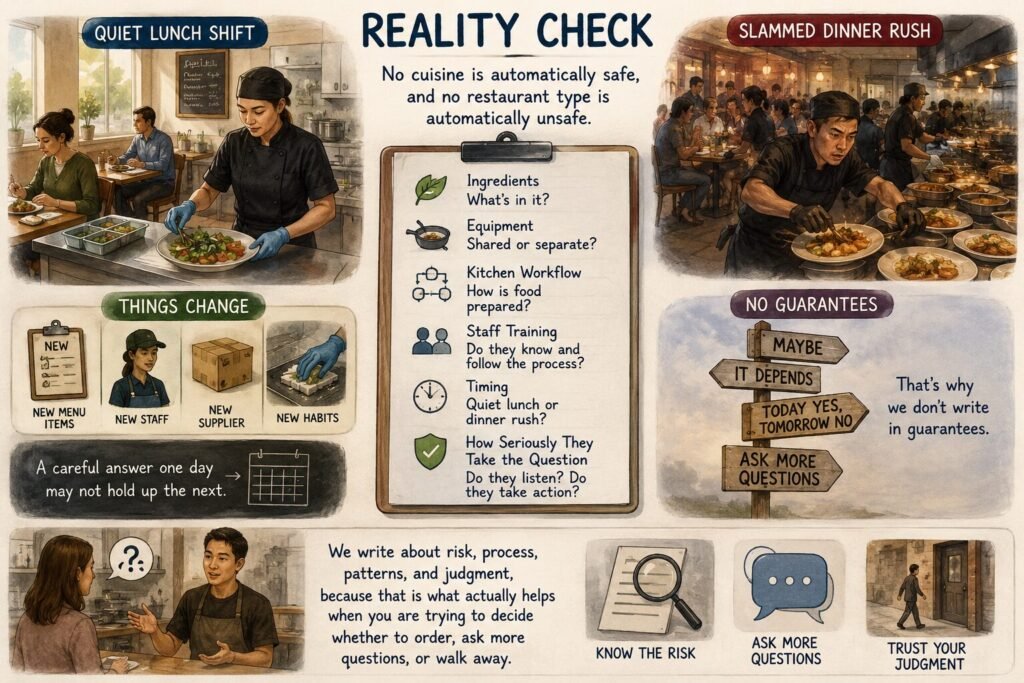
Good Signs
- Staff understand what cross-contact means.
- They explain preparation steps clearly.
- They know whether the fryer is dedicated.
- They identify dishes they cannot prepare appropriately.
- They offer alternatives without guessing.
- The order is marked clearly for the kitchen.
- Answers remain consistent between staff members.
- The menu explains limitations honestly.
One of the most useful answers is: “That item has no gluten ingredients, but we do not recommend it for guests who need strict separation because it uses a shared fryer.”
That answer may remove the item from consideration, but it gives you reliable information.
Red Flags
- “The heat kills gluten.”
- “We just remove the croutons.”
- “The fryer is shared, but it is fine.”
- “The pasta goes in the same water.”
- “We wipe the pizza area first.”
- “Nobody has complained.”
- “It should be okay.”
- “I think so.”
Also be cautious when answers change between staff members, nobody can verify ingredients, the kitchen is too busy to slow down, or the server appears to be guessing.
Confidence without a process is still uncertainty.
How to Talk to Staff
Be direct, calm, and specific. You do not need to apologize for asking, and you do not need to explain your entire medical history during dinner service.
Use short, practical language:
“I need to avoid gluten cross-contact. Can you check whether this dish can be prepared separately?”
If staff know, they can answer. If they do not know, they should check. If they guess, treat the uncertainty as part of your decision.
When to Ask for a Manager or Kitchen Lead
Ask for someone with more kitchen knowledge when the server seems unsure but the restaurant appears capable of handling the request.
A manager or kitchen lead may know:
- Which fryers are shared
- How pasta water and strainers are handled
- Whether sauces or proteins are prepared in advance
- Whether a clean pan or separate preparation area is available
- Whether the request is realistic during current service
Do not force the issue when the restaurant clearly lacks a process. Sometimes the useful answer is no.
When to Walk Away
Choosing another restaurant or meal may be appropriate when:
- Staff cannot answer basic questions
- The kitchen is too chaotic to manage the request
- The fryer, cooking water, or preparation system is shared
- The restaurant relies heavily on flour, dough, or breading
- Answers change from one person to another
- The server keeps guessing
- The available process does not fit your own requirements
- You are traveling and cannot reasonably absorb the consequences of a bad meal
A restaurant does not have to be bad to be a poor fit. It may simply lack the equipment, space, ingredients, or procedures required for your order.
Cross-Contact Changes by Cuisine
Italian Restaurants
Watch pasta water, strainers, sauce ladles, flour-heavy pizza preparation, oven contact, bread service, fryers, and shared pans.
Chinese Restaurants
Watch soy sauce, cooking wine, marinades, premixed sauces, shared woks, fryers, battered food, noodles, dumplings, and advance preparation.
Browse the growing Gluten-Free Cuisine Risk Guide library for more restaurant-specific patterns.
The Bottom Line
Gluten-free menus matter. They are not enough by themselves.
A dish can begin with gluten-free ingredients and still encounter gluten through shared oil, water, pans, ovens, surfaces, utensils, toppings, containers, or rushed handling.
The most useful restaurants are not always the ones with the longest gluten-free menu. They are the ones that understand cross-contact, explain the process clearly, and identify what they cannot control.
Do not ask only whether the food is gluten-free. Ask how it is prepared.
Continue Your Research
- I’m Hungry: What Are My Gluten-Free Restaurant Risks?
- Shared Fryers and Gluten-Free Food: What Actually Matters
- Gluten-Free Cuisine Risk Guides
- Gluten-Free Restaurant Reviews
- Medical & Food Disclaimer
Last reviewed: July 27, 2026