

Shared Fryers and Gluten-Free Food: What Actually Matters
Potatoes, corn chips, wings, vegetables, and other foods may begin without gluten. The fryer oil, baskets, utensils, seasoning area, and handling after cooking determine what happens next.
French fries may be made from potatoes. Tortilla chips may be made from corn. Chicken wings may have no breading at all.
But when those foods are cooked in oil shared with breaded chicken, onion rings, battered fish, tempura, or other gluten-containing food, the fryer becomes part of the gluten-free decision.
For diners who need to avoid gluten cross-contact, checking the ingredients is only the beginning. You also need to know what else has entered the oil and how the food is handled before and after frying.
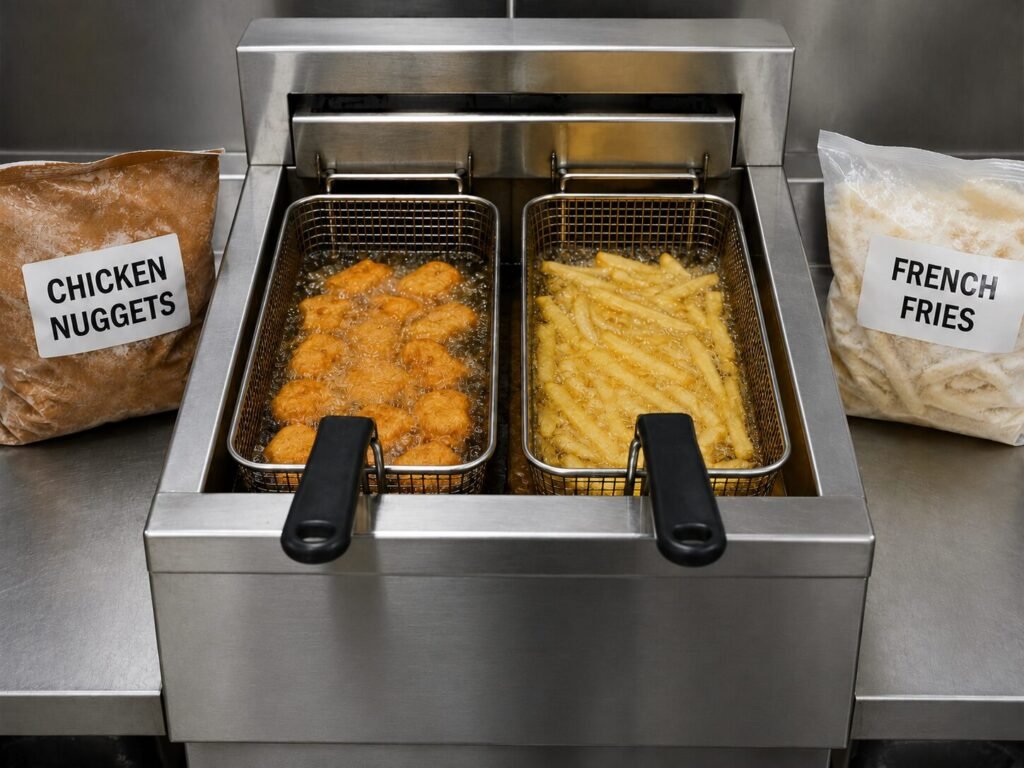
The fryer question is not whether the food began gluten-free. It is whether the complete frying process keeps it separate from gluten-containing food.
The Shared Fryer Rule
If a fryer is used for breaded or battered gluten-containing food, food cooked in that same oil should not be treated as gluten-free by someone who requires strict avoidance.
Crumbs, batter, and breading can separate from food and remain in the oil. Otherwise gluten-free fries, chips, vegetables, wings, or seafood then cook in the same environment.
The useful question is not simply:
“Are the fries gluten-free?”
Ask:
“Are the fries cooked in a dedicated gluten-free fryer, or do they share oil with breaded or battered food?”
That question addresses the restaurant’s actual process rather than only the ingredients in the fries.
Do not ask only:
“Is this fried food gluten-free?”
Ask:
“What else is cooked in that oil, and how is the food handled afterward?”
Why Shared Fryers Matter
A shared fryer can expose food to gluten through more than the oil itself. The full frying system may include:
- Oil containing crumbs, batter, or breading
- Baskets used across regular and gluten-free orders
- Tongs, scoops, and utensils used for multiple foods
- Shared trays, warming areas, and dump stations
- Seasoning bowls used for different fried foods
- Gloves that touch breaded and unbreaded items
- Shared packaging or plating surfaces
A fryer may be dedicated in theory and still fail in practice if the finished food is dumped onto a crumb-covered tray or handled with shared tools.
Heat Does Not Remove the Gluten Concern
Restaurant staff sometimes say fryer heat “kills” gluten.
That explanation confuses cooking temperatures used for microbes with the handling of gluten-containing food.
High fryer temperatures do not turn oil shared with breaded or battered gluten-containing food into suitable oil for someone who needs to avoid gluten cross-contact.
If the restaurant’s explanation depends on heat making the gluten disappear, the staff may not understand the actual fryer concern.
A Separate Basket Is Not a Dedicated Fryer
A dedicated gluten-free fryer uses oil that is not also used for gluten-containing food.
A separate basket placed into shared oil does not create a dedicated fryer. Both baskets still enter the same oil, where crumbs and batter may be present.
A restaurant may have several fryers without assigning any of them exclusively to gluten-free food. Fryer assignments can also change during busy service.
Ask what is actually cooked in the specific fryer being used for your order.
Foods Commonly Affected by Shared Oil
These foods may begin without gluten-containing ingredients but become poor choices for strict gluten-free dining when cooked in shared oil:
- French fries and tater tots
- Tortilla chips and fried corn tortillas
- Chicken wings
- Hash browns and fried potatoes
- Plantains and yuca fries
- Falafel
- Fried vegetables
- Unbreaded seafood
- Gluten-free breaded chicken, fish, or onion rings
- Gluten-free doughnuts or other fried bakery products
A gluten-free recipe does not overcome a shared cooking process. Gluten-free chicken tenders cooked in the same oil as regular breaded chicken still share the fryer environment.
Fresh Oil Is Not Enough
Freshly changed oil may begin without gluten-containing residue.
Once breaded or battered gluten-containing food enters the fryer, the relevant condition has changed.
The useful question is what goes into the oil during service, not only when the oil was replaced.
Where Shared Fryers Commonly Appear
Burger Restaurants and Bars
Fries may share oil with onion rings, chicken tenders, mozzarella sticks, fried pickles, breaded wings, or battered fish.
Mexican Restaurants
Corn tortilla chips may share oil with flour tortillas, chimichangas, breaded food, or battered fish. Corn ingredients alone do not answer the fryer question.
Italian Restaurants
Calamari, arancini, breaded cutlets, fried mozzarella, eggplant, and seafood may make shared oil unsuitable for fries or fried vegetables.
Chinese and Other Asian Restaurants
Tempura, egg rolls, wontons, breaded meats, battered seafood, and fried appetizers may all use the same oil.
Breakfast Restaurants and Diners
Hash browns, potatoes, and breakfast sides may share oil with breaded chicken, onion rings, or other lunch and dinner items.
Seafood Restaurants
Unbreaded seafood, fries, and vegetables may share oil with battered fish, hush puppies, crab cakes, and breaded shellfish.
Seasoning and Handling After Frying
Food can leave a dedicated fryer and encounter gluten afterward.
Ask whether the food is:
- Placed on a clean tray or surface
- Handled with clean tongs or scoops
- Seasoned with verified ingredients
- Placed in a clean bowl or container
- Kept away from breaded food in a warming area
- Packaged separately for takeout
Loaded or heavily seasoned fries involve more ingredients and handling than plain fries. Cheese sauces, spice blends, gravy, toppings, and shared scoops may all need separate verification.
A dedicated fryer solves the oil question. It does not automatically solve everything that happens after the food leaves the fryer.
Answers That Help
A useful answer describes the process clearly:
“We have a dedicated fryer used only for gluten-free items, and we use separate baskets, clean utensils, and a clean tray.”
An honest warning also helps:
“The fries contain no gluten ingredients, but they share a fryer with breaded food.”
The second answer may mean skipping the fries, but it shows that the restaurant understands the distinction and is giving you information you can use.
Fryer Red Flags
- “The oil is hot enough to kill gluten.”
- “The fries are potatoes, so they are gluten-free.”
- “Everything uses the same fryer, but it should be fine.”
- “We use a different basket in the same oil.”
- “We cleaned the fryer last night.”
- “The oil was changed this morning.”
- “Nobody has complained before.”
These answers focus on the ingredient, basket, temperature, or cleaning schedule without explaining what actually enters the oil during service.
Confidence does not make a shared fryer dedicated.
A Dedicated Fryer Is a Complete Process
A dedicated fryer is more than a separate basket.
It involves controlled oil, fryer assignments, baskets, utensils, trays, seasoning, warming, and packaging.
The strongest answer explains the entire path from freezer or prep area to plate or takeout container.
A Short Fryer Checklist
- Is the fryer dedicated to gluten-free food?
- What other food is cooked in that oil?
- Can fryer assignments change during busy service?
- Are separate baskets and utensils used?
- Where is the food placed after frying?
- Are seasoning blends and toppings verified?
- Are clean trays, bowls, and packaging used?
- Does the same process apply during the shift you are visiting?
What to Order When the Fryer Is Shared
If the fryer is shared, consider a non-fried option that the restaurant can prepare with controlled ingredients and clean equipment.
Depending on the kitchen, possibilities may include:
- Protein cooked in a clean pan
- Plain rice
- A baked potato
- Steamed vegetables
- Fruit
- A salad prepared without croutons on a clean surface
- Packaged food with a label you can review
These options still require normal ingredient and preparation questions. Avoiding the fryer removes one major concern but does not verify the rest of the meal.
Takeout and Delivery Add Another Handoff
Even when the fryer process is controlled, takeout and delivery introduce packaging and order-assembly questions.
- Was the correct fryer used?
- Was the food placed in a clean container?
- Were breaded items packed beside it?
- Were sauces or toppings added correctly?
- Was the order label clear?
- Did the correct bag reach you?
Contact the restaurant directly when fryer handling matters. A delivery-app note is not a substitute for a restaurant process that staff understand.
The Bottom Line
The potato, corn tortilla, vegetable, or unbreaded wing may begin without gluten. The cooking and handling process determines what happens next.
When strict gluten avoidance matters, look for a dedicated fryer supported by separate baskets, utensils, trays, seasoning, and post-frying handling.
If the oil is shared with breaded or battered food—or the staff cannot explain the process—skip the fried food.
A separate basket is not separate oil, and gluten-free ingredients do not create a gluten-free fryer.
Continue Your Research
- Restaurant Cross-Contact: Why Gluten-Free Menus Are Not Enough
- I’m Hungry: What Are My Gluten-Free Restaurant Risks?
- Gluten-Free Cuisine Risk Guides
- How to Eat Gluten-Free at an Italian Restaurant
- Chinese Food and Gluten: What Gluten-Free Travelers Should Know
- Medical & Food Disclaimer
Last reviewed: July 27, 2026